The library
Prompts I keep on a shelf.
The full text of six image-generation prompts I return to often, beside the exact image each one produced. Not curated stock — every result on this page was generated from the prompt printed beside it.
Product · macro
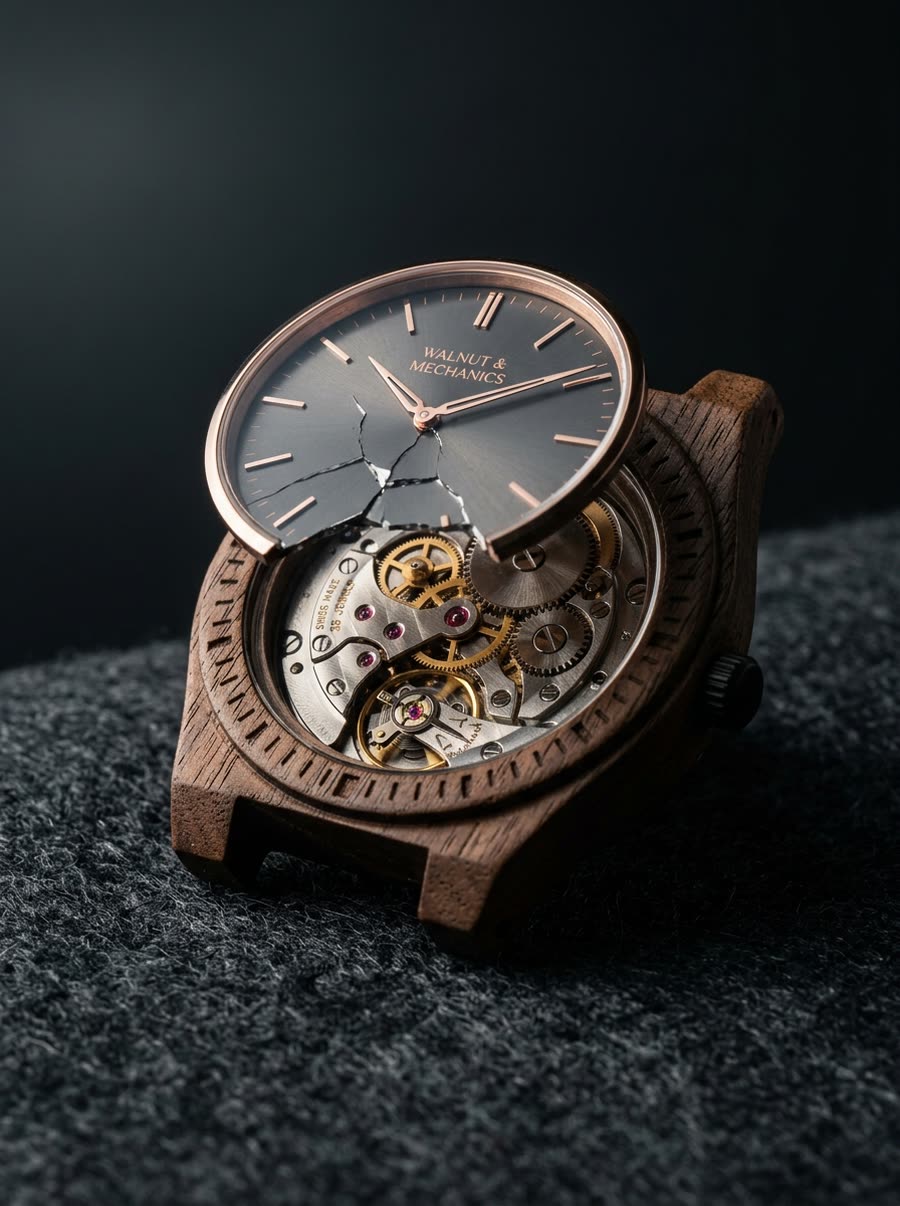
A watch as architecture
When the brief mentions a specific reference ("Architectural Digest meets Hodinkee"), the model orients its lighting plan around that aesthetic — single hard rim light, vinyl-black backdrop, macro depth-of-field. The "clamshell open" instruction is what produced the cracked face. The model invented its own brand wordmark, which is fine for a moodboard, never for production work.
The prompt
Cinematic editorial product still. A carved walnut watch case on charcoal felt, a single hard rim light from the upper left, vinyl-black backdrop. The watch face cracked open like a clamshell revealing the exposed mechanism. Macro depth of field. Architectural Digest meets Hodinkee. Photorealistic.
Food · overhead
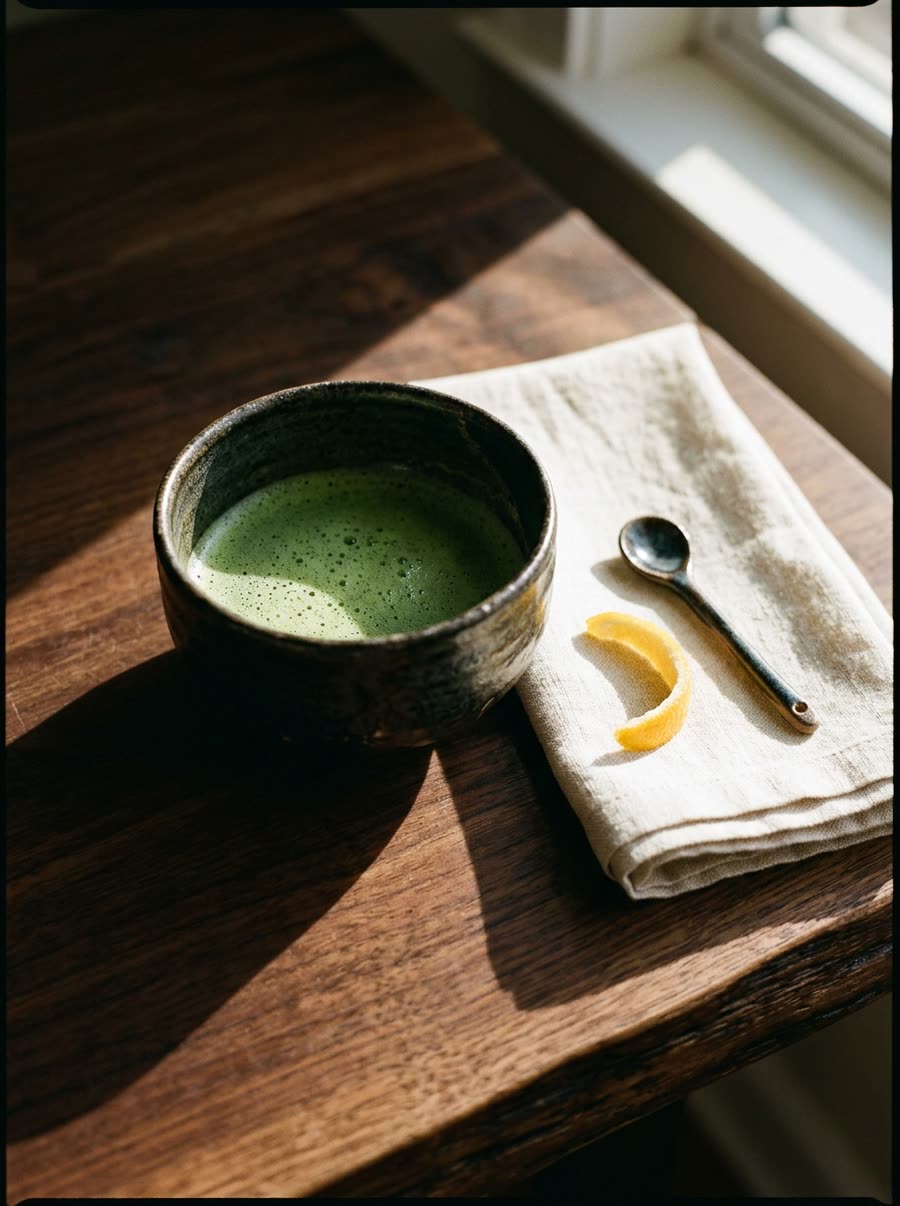
A still life that breathes
Two structural rules carry this one: "Kinfolk magazine aesthetic" (compresses to muted palette + breathing room) and "warm window light from frame-right cuts a hard shadow" (locks in the directional lighting). Naming the props specifically — chawan, linen, yuzu rind — keeps the model from inventing extras.
The prompt
Overhead 35mm shot, dark wood table edge in foreground. A single chawan tea bowl with matcha, a folded linen napkin in cream, a yuzu rind, a tiny ceramic spoon. Warm window light from frame-right cuts a hard shadow across the table. Kinfolk magazine aesthetic. Restrained, atmospheric. No people.
Architecture · interior
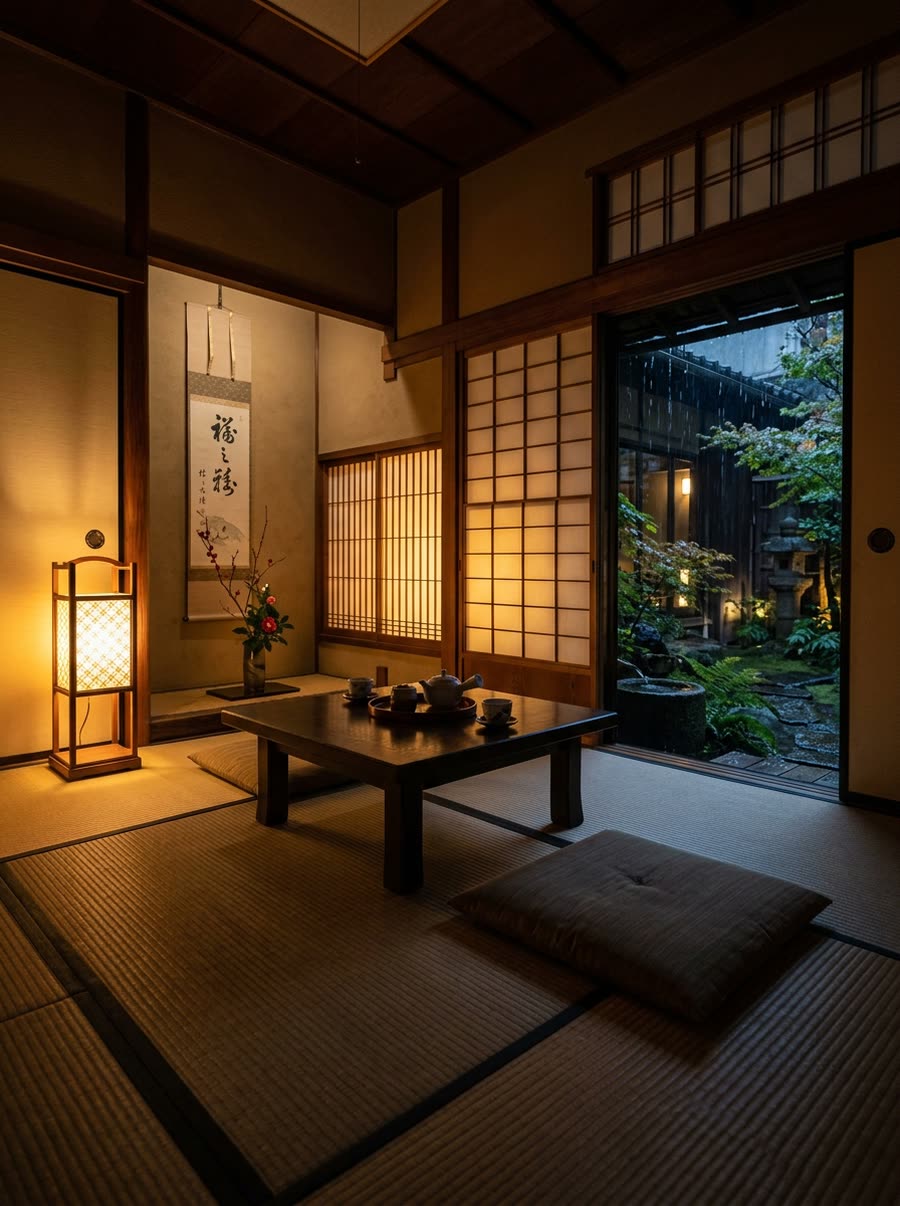
Light through a sliding door
The cue that makes this image work is "shoji screens diffuse golden lantern light". Diffusion-language gives the model an entirely different lighting model from "lit by a lantern". The "rain falling in the garden beyond" hook adds motion implication without animation; viewers feel the weather even in a still.
The prompt
Wide cinematic interior. A Japanese ryokan room at dusk. Shoji screens diffuse golden lantern light. A low cedar table, one tatami mat, a single sliding door cracked open showing rain falling in the garden beyond. Editorial stillness, atmospheric warmth. No people.
Portrait · editorial
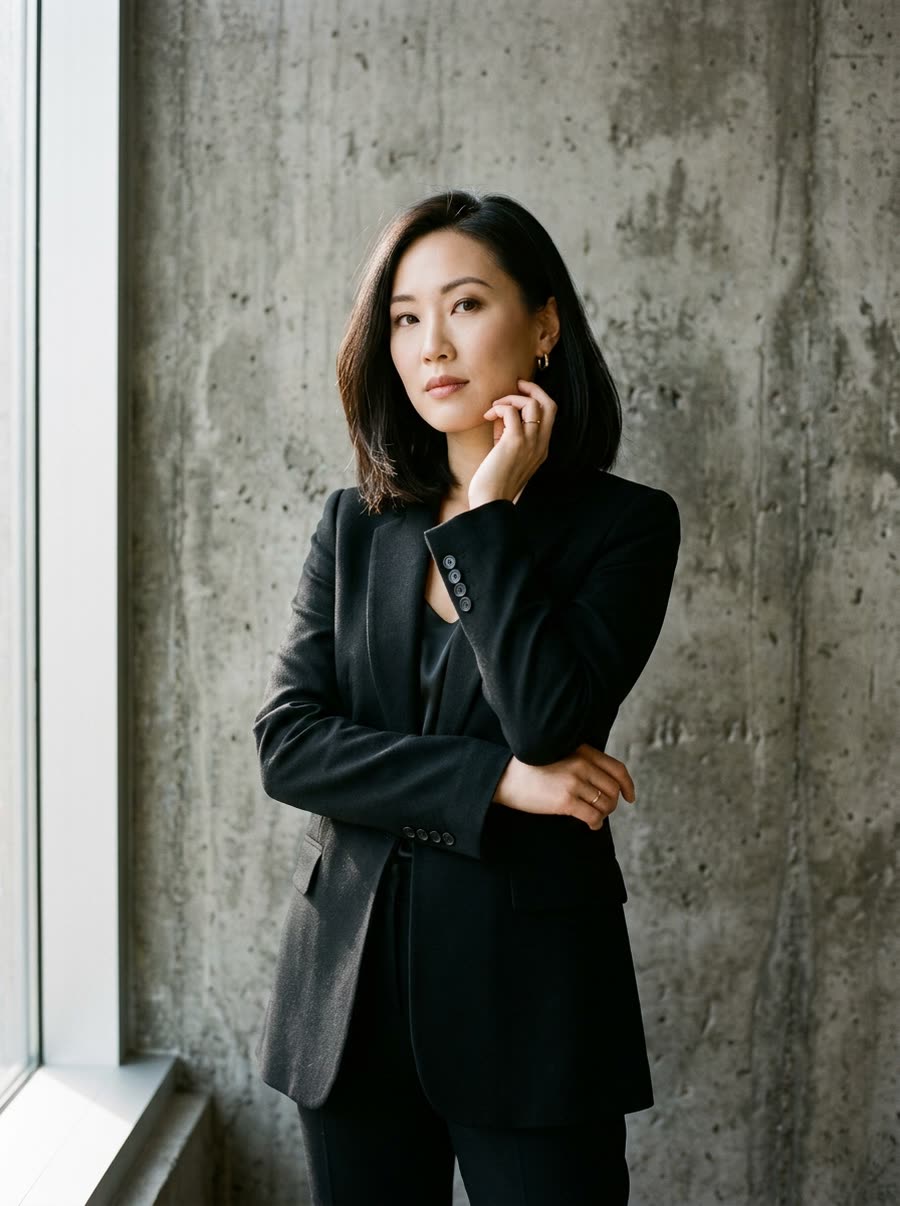
A portrait that doesn’t flatter
"Photographed on medium format" is doing the most work here — it tells the model to honour the depth-of-field and skin texture you get from a Hasselblad / Phase One, not a phone-camera bokeh blob. Adding "magazine cover quality" puts the model in editorial mode rather than fashion-influencer mode. The off-camera gaze is what keeps it from feeling staged.
The prompt
Editorial portrait. A confident East Asian woman in her thirties wearing a tailored black blazer against a textured grey concrete wall. Three-quarter angle, hand resting on jaw, gaze just off-camera. Single window light from frame-left, soft shadow falling right. Photographed on medium format, magazine cover quality. Refined, museum-quality, no logos.
Lifestyle · flat-lay
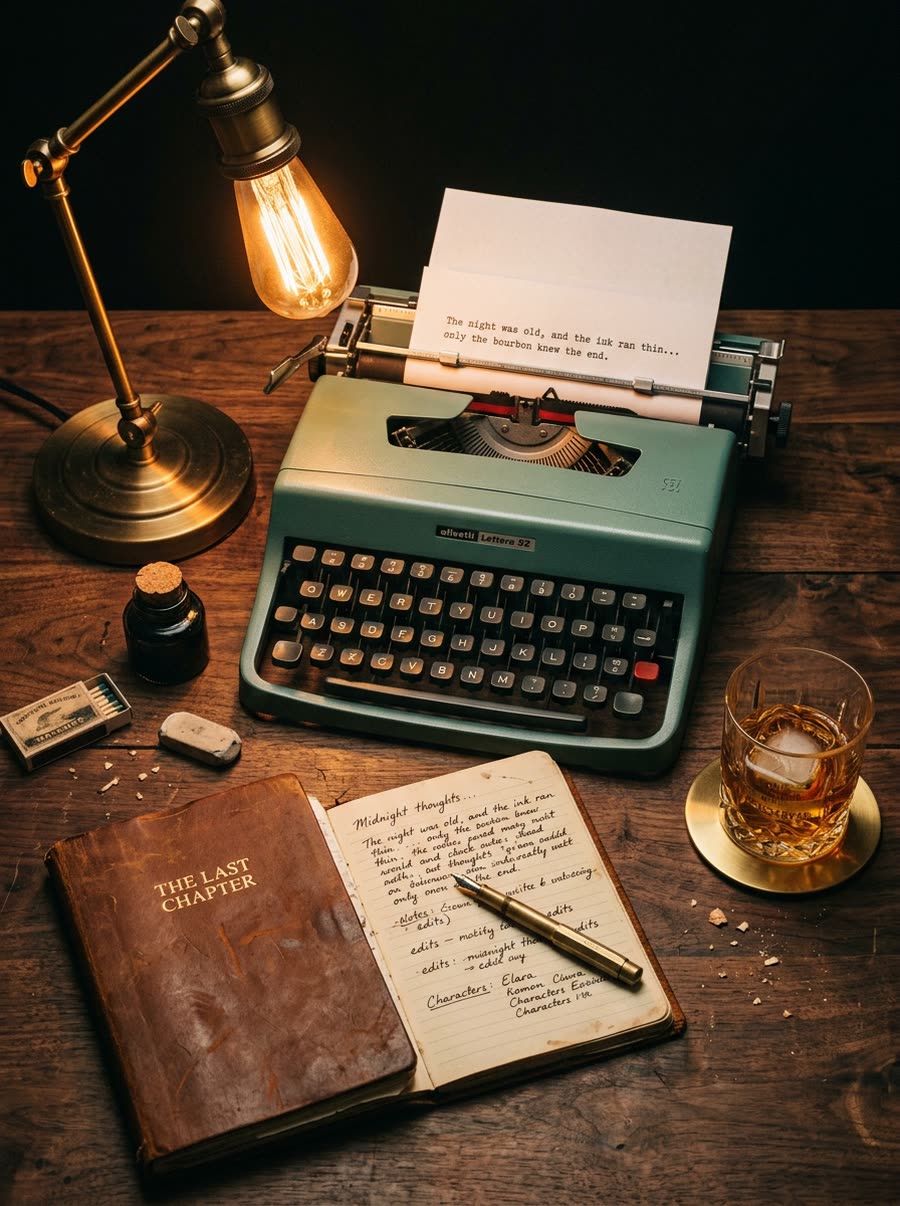
Working past midnight
Specifying the typewriter brand ("Olivetti") fixes the silhouette. Naming the desk lamp’s material ("brass") fixes the colour temperature of the bounce light. The bourbon is on a brass coaster — that single detail moves the image from "stock" to "someone’s actual writing desk". Models reward specific objects more than abstract mood adjectives.
The prompt
Macro flat-lay photograph. A vintage Olivetti typewriter on a walnut desk. Beside it: a brass desk lamp casting warm tungsten light, a leather-bound notebook open with handwritten manuscript pages, a small glass of bourbon on a brass coaster. Late-night writer mood. Editorial composition.
Abstract · brand surface
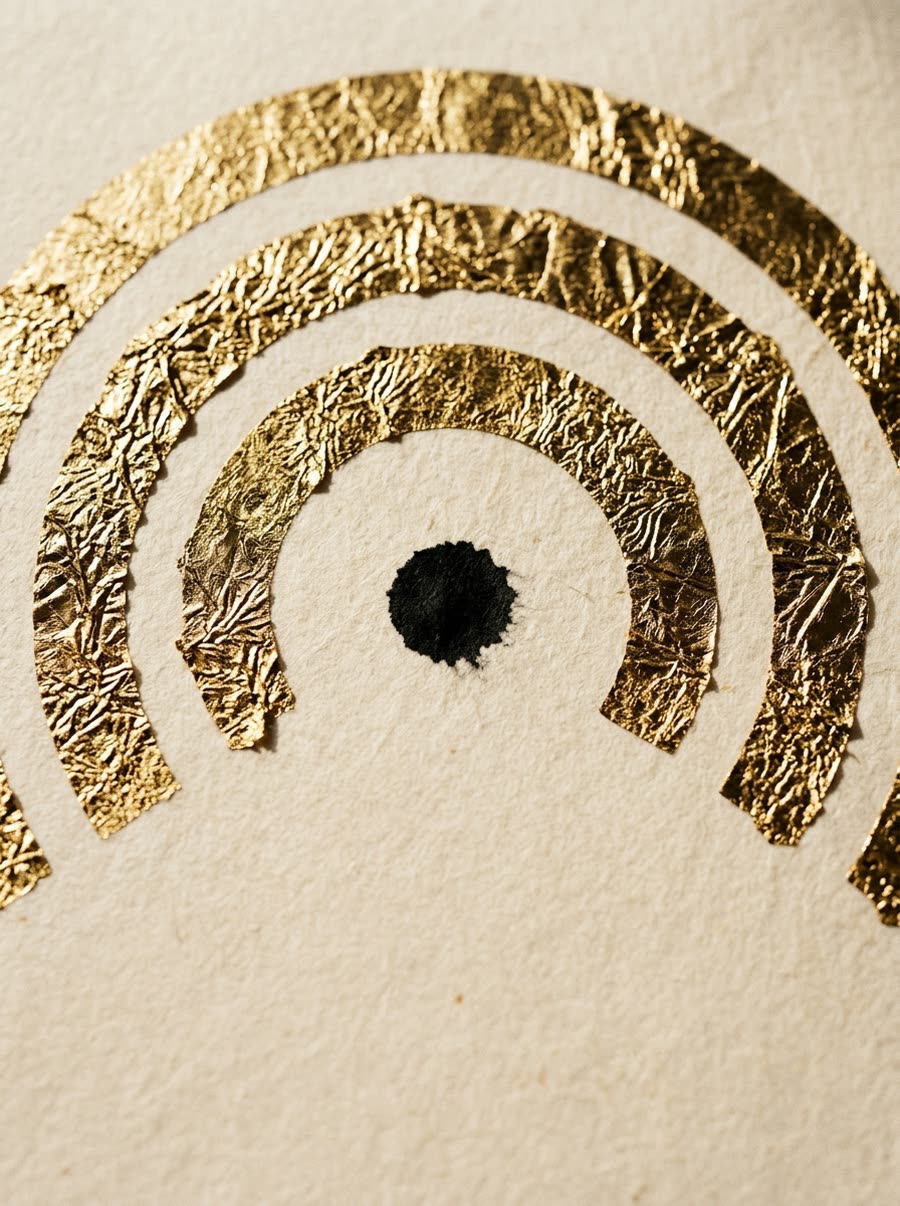
Restraint as a flex
Abstract briefs need extreme constraint or they devolve into AI swirl. "Three concentric arcs of crinkled gold leaf on cream paper" is unambiguous geometry. "A single black sumi-e ink dot at the centre" is unambiguous content. The model has nothing to invent — it just photographs the brief.
The prompt
A macro abstract photograph. Three concentric arcs of crinkled gold leaf on warm cream paper. Hard side light casting micro-shadows. A single black sumi-e ink dot at the centre. Editorial sumi-e meets fashion magazine. Restrained, museum-quality. No text, no logos.
Four habits
What every prompt above quietly does the same way.
Rule 01
Lead with the photographic format.
"Macro flat-lay 35mm", "wide cinematic interior", "editorial portrait on medium format" — these phrases load the model with an entire lighting + composition grammar before you describe the subject.
Rule 02
Name objects, not moods.
"Bourbon on a brass coaster" beats "cozy atmosphere". Models reward proper nouns and concrete materials. Reserve mood adjectives for the last sentence — they tune the overall vibe, not the content.
Rule 03
Tell it what NOT to render.
"No text, no logos, no people, no watermark" is the most-used clause in this entire library. It cuts the model’s default desire to add a fake brand mark or a stock-photo subject by 90%.
Rule 04
Cite a reference, then negate it.
"Architectural Digest meets Hodinkee" loads a whole reference palette. Following it with "but no decorative typography" prunes the parts you don’t want. The two-phase reference is faster than describing the look from scratch.